
Author: Site Editor Publish Time: 2025-09-17 Origin: Site


 In fluid control systems, ball valves are reliable and easy-to-use components used to open, close, or regulate the flow of liquids, gases, or slurries. Known for their fast operation and tight sealing, ball valves are indispensable for applications requiring fast, leak-free flow control. But what exactly is a ball valve? How does it achieve such efficient performance? Let's take a step-by-step look.
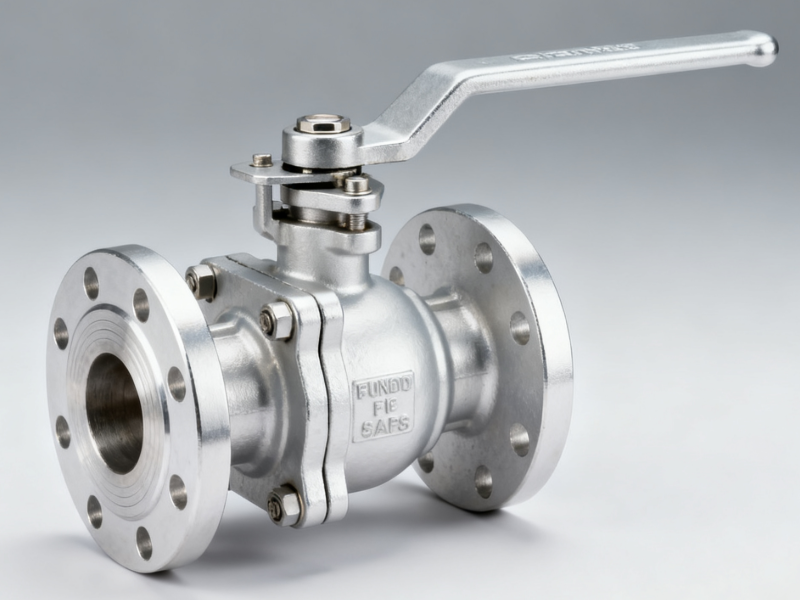
At its core, a ball valve is a quarter-turn valve that uses a hollow, perforated sphere (called a "ball") as the control element. The ball sits within the valve body and is connected to an external handle or actuator via a stem. When the handle is rotated 90 degrees (a "quarter turn"), the ball rotates—aligning its holes with the valve's inlet and outlet, allowing fluid flow, or blocking its passage, preventing flow.
Unlike gate valves (which require multiple turns to operate) or globe valves (which are better suited for precise regulation but are slower), ball valves excel at on-off control. Ball valves are also prized for their durability: the ball's smooth surface minimizes wear, and its simple design reduces the risk of mechanical failure, making it suitable for high-pressure, high-temperature, or corrosive environments (for example, oil and gas pipelines, chemical processing, or residential water lines).
A standard ball valve consists of five basic components, each of which plays a critical role in its function. Understanding these components helps explain how the valve works:
Body: The outer casing that houses all internal components and connects to the pipe via threads, flanges, or welding. Valves for industrial use are typically made of metal (brass, stainless steel), while those for residential pipes are made of plastic (PVC).
Ball: A spherical control element with a central hole (bore). In some designs, the bore is sized to match the pipe diameter for full flow; in others, the bore may be smaller for throttling (partial flow).
Stem: The rod that connects the ball to the handle or actuator. When the stem turns, it rotates the ball, opening and closing the valve.
Valve Seat: A soft or hard ring (usually made of PTFE, rubber, or metal) that presses against the ball to create a tight seal. It prevents leakage when the valve is closed.
Handle/Actuator: The external control device of the valve. Manual ball valves use a lever handle (which can be easily rotated 90 degrees), while automatic ball valves are remotely operated using electric, pneumatic, or hydraulic actuators (common in industrial settings).
The ball valve's operation is simple yet effective, relying on a quarter-turn rotation of the ball. Here's a step-by-step breakdown of its operation:
Closed Position: When the handle is perpendicular to the pipe, the ball's bore faces away from the inlet and outlet. The ball's solid sides press against the valve seat, blocking fluid flow and forming a tight seal to prevent leakage.
Opening the Valve: When the handle is rotated 90 degrees (toward the pipe), the valve stem rotates the ball. Gradually, the ball's bore aligns with the valve's inlet and outlet. Fluid begins to flow through the valve bore, and maximum flow is achieved when the handle is perfectly parallel to the pipe.
To close the valve: Turn the handle 90 degrees (perpendicular to the pipe), and the ball rotates again, bringing its solid side back into contact with the valve seat. This instantly shuts off the flow.
One of the greatest advantages of a ball valve is speed: it only takes a quarter turn to switch between fully open and fully closed, which is faster than valves that require multiple turns. Furthermore, the ball's smooth surface reduces friction against the valve seat, extending valve life and ensuring consistent performance.
Not all ball valves are created equal—different designs make them suitable for different applications. Here are the most common types:
Full-Bore Ball Valve: Its bore is the same diameter as the pipe, allowing for maximum flow with minimal pressure drop. It's ideal for systems where unobstructed flow is critical (e.g., water lines, fuel transfer).
Reduced-Bore Ball Valve: Its inner diameter is smaller than the pipe diameter, restricting flow, but it's more compact and affordable. It's suitable for low-flow or throttling applications (e.g., controlling chemical dosage).
V-Split Ball Valve: The ball has a V-shaped notch instead of a round bore. The V-shaped design enables precise flow regulation (not just on/off control) and is suitable for applications such as mixing fluids or regulating pressure (e.g., HVAC systems and industrial process control).
Trunnable ball valves: Two "trunnions" (supports) secure the ball in place, reducing pressure on the valve stem and seat. These valves are designed for high-pressure, large-diameter pipelines (e.g., oil and gas pipelines).
In addition to these common ball valves, there are other types of ball valves, such as floating ball valves and orbital ball valves, which are widely used in industrial and domestic applications.
Ball valves have always been the preferred choice for fluid control for the following reasons:
Fast Operation: The quarter-turn design enables quick on/off control, saving time in emergency situations (e.g., shutting off a water source in the event of a leak).
Leak-proof: The tight seal between the ball and the seat minimizes leakage, even under high pressure or temperature fluctuations.
Durability: The simple construction and fewer moving parts reduce wear, resulting in a longer service life (typically over 10 years with minimal maintenance).
Versatility: Suitable for a wide range of fluids (water, oil, gas, chemicals) and environments (residential, commercial, industrial).
Whether you're repairing a domestic plumbing problem or designing an industrial pipeline, a ball valve is a reliable solution for fast, leak-free flow control. Its simple operating principle—a rotating ball opens or blocks flow—makes it easy to operate and maintain, and its wide variety of styles accommodates nearly any application. From full-port models for maximum flow to V-port designs for precise regulation, ball valves have long been a cornerstone of fluid control systems worldwide.To learn more information about valve,you can visit our website:https://www.bjafatech.com.We are areliable industrial valve supplier,providing high-peformance valve and valve solutions.Please contact us by +86-18611864848 or banmy@bjafatech.com if you have any questions.


